
When you need to shrink a PDF fast, the quickest route is often an online compression tool. Something like PDFPenguin can automatically crunch down images and strip out unneeded data. It's the perfect fix for making a bulky file small enough to email reports, submit assignments, or share portfolios without hitting those frustrating attachment limits.
Why Your PDF Files Are So Large
Ever tried to email an important document, only to get that maddening "file too large" error? It's a common headache, and it usually boils down to a few key culprits hiding inside your PDF. Figuring out what’s causing the bloat is the first step toward creating leaner, more manageable files.

Most of the time, the biggest offender is high-resolution images. A single, uncompressed photo can easily add dozens of megabytes to a document. Scanned documents are another one to watch out for—they’re basically just large image files, and their size can spiral out of control fast.
Unseen Elements Adding Weight
It’s not just the stuff you can see. A lot of a PDF's weight comes from elements working behind the scenes. These are the things you don't even notice until your file size is through the roof.
Here are the most common hidden culprits:
- Embedded Fonts: When a PDF decides to pack in the entire character set for every font used, it adds serious weight. Most of the time, your document only needs a tiny fraction of those characters.
- Hidden Metadata: All that background info—like the author, creation date, and the software used—gets stored in the file, adding extra data you just don't need.
- Complex Objects and Layers: Vector graphics, detailed charts, and layered elements pulled from programs like Adobe Illustrator can make a file much larger than it looks.
The Impact of Inefficient Compression
How a PDF is first created makes a huge difference. If it was saved with low or no compression settings, every single element—from text to graphics—is taking up way more space than it should.
Smart compression is non-negotiable. In a modern office where people juggle dozens of PDFs daily, file size matters. Real-world tests show that compressing objects and removing "orphaned" data in a typical PDF can lead to an astounding 86% file size reduction. We're talking about shrinking a 5.7 MB document down to just 0.8 MB with no noticeable loss in quality. You can discover more insights about PDF optimization to see how it works.
This is exactly why tools like PDFPenguin are so effective. They’re built to target these specific issues automatically. By intelligently optimizing images, stripping out junk data, and compressing the file's structure, you can finally get your documents ready to send without a second thought.
Taming the Biggest PDF Space-Hogs: Your Images
Ever tried to email a PDF, only to get that dreaded "file too large" error? Nine times out of ten, the culprit is the images. High-resolution photos, detailed charts, and crisp scans are the number one reason PDFs get bloated, but shrinking them down is easier than you think.
It’s all about finding that perfect balance between a small file size and a sharp, professional look. You don’t want your visuals to turn into a pixelated mess. The two key tricks here are downsampling and compression—they sound technical, but they're surprisingly simple.
Finding the Sweet Spot with Downsampling
Downsampling just means reducing the number of pixels in an image, which is measured in Dots Per Inch (DPI). More dots, more detail, bigger file. The secret is to match the DPI to how the document will actually be used.
- For Screen Viewing (Websites, Emails): Stick to 72 to 150 DPI. Honestly, the human eye can't really tell the difference on a screen beyond that, so any higher is just wasted space.
- For Standard Office Printing: Aim for 150 to 200 DPI. This keeps everything looking sharp on paper without creating a monster file.
- For Professional Printing (Brochures, Banners): You'll need 300 DPI or higher. Here, quality is everything, and the file size is a secondary concern.
I've seen files shrink by 50-75% just by downsampling images from a print-ready 300 DPI to a screen-friendly 150 DPI. The quality for digital sharing is still fantastic.
Applying Smart Compression
After you’ve nailed the resolution, it's time for compression. Different images need different types of compression. For example, JPEG compression is perfect for photographs because it's built to handle millions of colors and subtle tones. On the flip side, ZIP compression is usually better for logos or charts with big, solid blocks of color.
Luckily, you don't have to be an expert. Most modern tools, including PDFPenguin's online compressor, figure out the best method for you automatically. You just pick a compression level.
Here's what a simple, no-fuss compression tool looks like:
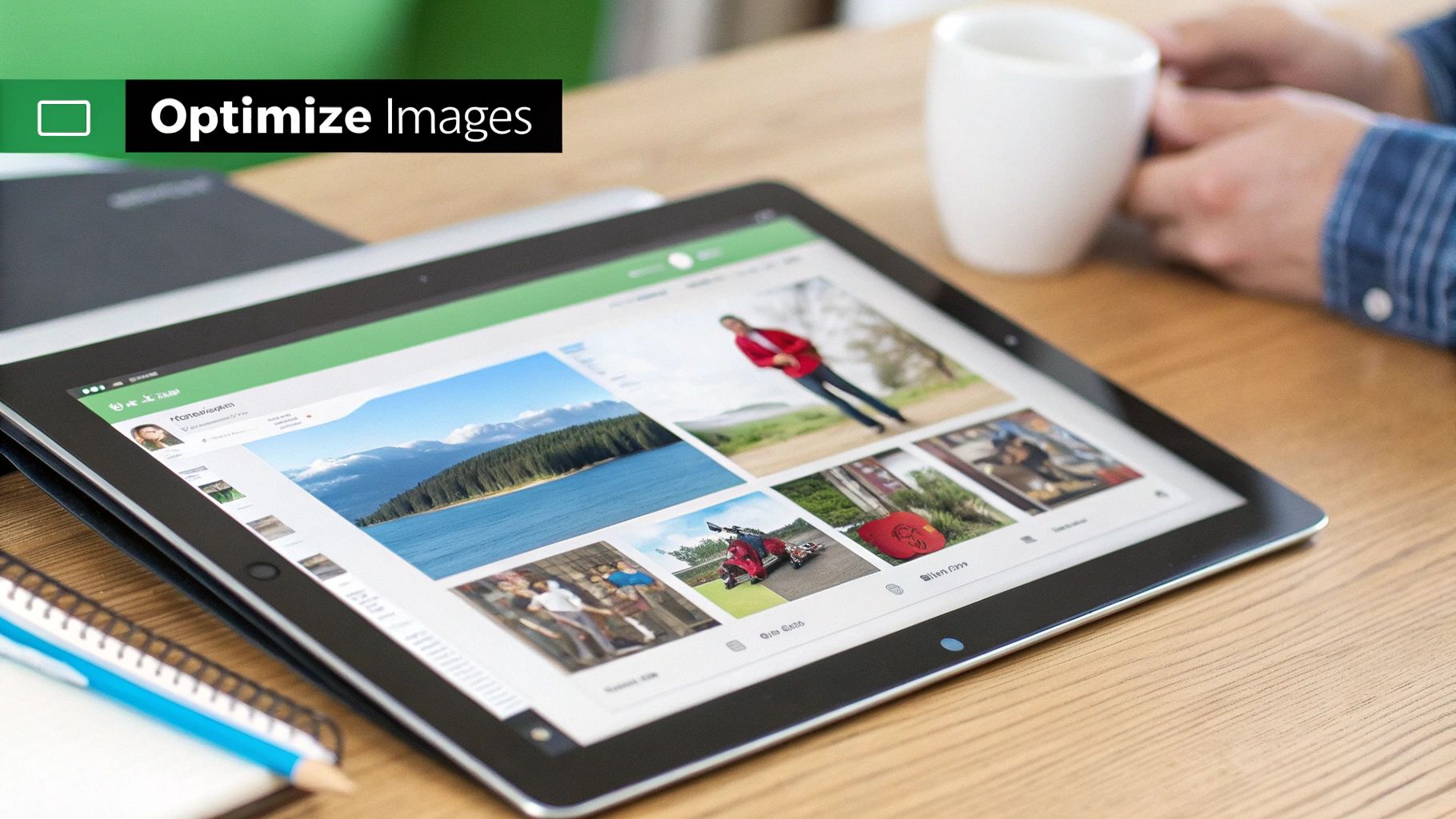
The options let you quickly choose the right balance between file size and image quality, whether you're emailing a proposal or uploading a report. And if you have a bunch of pictures you need to get into a single document first, check out our guide on how to convert images to PDF.
Since images can make up 70-90% of a file's total size, these techniques make a massive difference. You don't even need fancy software. I once saw a 3.4 MB file of scanned lecture notes get crunched down to just 1.3 MB—a 62% reduction—using only the built-in tool on a Mac. You can watch the tutorial on Mac PDF compression to see it in action.
That’s how a 20 MB marketing presentation becomes a lean, 4 MB attachment that actually makes it into your client's inbox.
Tackling Hidden Data and Embedded Fonts
Images usually get all the blame for bloated PDFs, but often, it's the invisible stuff—the digital baggage hiding in your file—that's really weighing things down. Things like embedded fonts and hidden metadata quietly add megabytes, making your documents a headache to share.
Think of it like packing a suitcase. The images and text are the clothes you can see. But the fonts, metadata, and leftover junk are like packing heavy shoes for every single outfit "just in case." Clean them out, and the whole package gets lighter without sacrificing the essentials.
The Problem with Embedded Fonts
When you save a PDF, the software often embeds the entire font family to make sure it looks perfect on any computer. Sounds helpful, right? But it means if you use just one single character from a font like "Garamond," the whole character set—hundreds or even thousands of letters and symbols you don't need—gets packed into the file. It's a massive waste of space.
The fix for this is called font subsetting. Instead of packing the whole font library, it only includes the specific characters you actually used in your document. For text-heavy files like reports, ebooks, or legal documents, this is a total game-changer.
I see this all the time with long corporate reports. People optimize the images, but the file is still huge because it contains three different font families for headings and body text. Just subsetting those fonts can easily slash the file size by 20-30% without changing a single word on the page.
Stripping Away the Digital Baggage
Beyond fonts, your PDF is probably carrying around other junk data. This digital baggage includes stuff you'll almost never need but that still adds to the file's weight.
This hidden information often includes:
- Metadata: This is data about your data—the author's name, creation date, keywords, and what software made the file. While sometimes useful, it's usually just clutter.
- Comments and Annotations: Every highlighted sentence, sticky note, or tracked change adds another layer of data, increasing the size.
- Form Fields: Those interactive fields for names and signatures take up space, even if they're blank.
- Unused Objects: Sometimes, when you delete an image or a chunk of text, fragments can get left behind as "orphaned" objects in the file's code, taking up space invisibly.
Getting rid of this data can deliver some serious savings. In fact, fonts and metadata can inflate a PDF by 20-50%. Unembedding unused fonts alone can sometimes shrink a file by up to 65%. I once helped a client with a corporate report that dropped from 10 MB down to just 3.2 MB—a 68% reduction—just by clearing out the metadata and subsetting the fonts. You can learn more about advanced PDF size reduction techniques and see how it works for yourself.
For professionals in fields like law or finance, removing this hidden data isn't just about saving space. It’s also a critical security step to make sure sensitive info like author names or revision histories isn't shared by accident.
Choosing the Right Compression Tool
So, you need to shrink a PDF. The big question is, should you use a quick online tool or a beefy desktop program? Honestly, there’s no single "best" answer. It all comes down to what you’re trying to do. The right tool for a student scrambling to meet a submission deadline is completely different from what a business needs to manage sensitive client documents.
Let’s break it down.
Online tools are all about speed and simplicity. If you just need to shrink one report to get it under an email attachment limit, they’re perfect. You upload the file, click a button, and download the smaller version a few seconds later. No installs, no fuss—just a quick, easy fix.
Desktop software like Adobe Acrobat Pro, on the other hand, is built for power and control. If you handle dozens of PDFs every day, you need more. You need batch processing, precise control over image DPI, and advanced options for stripping out hidden data or optimizing fonts. This is where desktop apps shine.
Online Simplicity vs. Desktop Control
The real difference is the trade-off between ease of use and the sheer number of features. A freelancer who just needs to email an invoice doesn’t need a whole software suite—they just need a fast solution. That's where an online tool like PDFPenguin comes in, offering a dead-simple way to compress your PDF with zero learning curve.
But if you’re a large company preparing a multi-document legal filing, you absolutely need the security and fine-tuned control that only desktop software provides.
I’ve found that for about 80% of everyday tasks, a good online compressor is more than enough. But for that other 20%—the really complex, sensitive, or high-volume jobs—desktop software is the only way to go.
This decision tree gives you a peek into some of the hidden things that can make a PDF huge, many of which are easier to manage with more advanced tools.

As the chart shows, things like embedded fonts and leftover metadata are often the culprits behind a bloated file. Being able to target those specifically is a game-changer.
Online PDF Compressors vs Desktop Software
To make the choice clearer, here’s a head-to-head comparison to help you figure out which tool is right for your specific needs.
| Feature | Online Tools (e.g., PDFPenguin) | Desktop Software (e.g., Adobe Acrobat) |
|---|---|---|
| Best For | Quick, one-off compressions; non-sensitive files. | High-volume, complex, or sensitive documents. |
| Cost | Usually free for basic use. | Subscription or one-time purchase required. |
| Security | Reputable services are secure, but files are uploaded to a server. | Files never leave your computer. Maximum security. |
| Features | Simple compression levels (e.g., Low, Medium, High). | Granular control over DPI, font subsetting, metadata removal. |
| Accessibility | Works on any device with a web browser (PC, Mac, phone). | Tied to the specific computer where it's installed. |
| Batch Processing | Typically processes one file at a time. | Can compress hundreds of files at once. |
Ultimately, the best tool is the one that fits your workflow. For a quick shrink-and-send, an online tool is your best friend. For anything more demanding, investing in desktop software pays off.
Key Factors to Consider
Still on the fence? Think about these four things:
- Cost: Are you willing to pay for advanced features? Online tools are often free, while desktop software is a financial investment.
- Security: How sensitive are your documents? With desktop apps, your files stay local. While top online services use encryption and delete files, nothing beats keeping your data offline for top-secret info.
- Features: Do you just need to make a file smaller, or do you need to surgically remove specific elements? Do you process one file a week or a hundred a day?
- Accessibility: Do you need to compress a file from your phone or a library computer? Online tools win here, as they work anywhere. Desktop software locks you into one machine.
Advanced Strategies for Maximum File Reduction
Sometimes, the standard compression tricks just don't get the job done. You’ve optimized the images, you’ve picked the right preset, but your PDF is still frustratingly large. This happens all the time with complex files like architectural blueprints, interactive forms, or heavily edited legal contracts.
When you hit that wall, you need to go beyond the basics. These next few strategies are more aggressive, fundamentally rebuilding your file to strip out every last non-essential kilobyte.
Flattening Fields and Annotations
Ever worked with a PDF loaded with interactive form fields, comments, and digital signatures? Each one of those elements is a separate layer of data, adding bulk to the file. Flattening a PDF merges all those layers into one, making the annotations a permanent, non-interactive part of the page.
Think of it like gluing down the pieces of a collage. Before you flatten it, you can move every piece around. Afterward, it’s one single, solid image. This is a game-changer for documents with hundreds of comments or fields. Most pro-level PDF editors, like Adobe Acrobat, have a "Flatten" feature buried in their optimization tools.
A legal team I once helped had a 50-page contract drowning in comments and signature fields. The file was a monstrous 25MB. Just by flattening it—without touching a single image—we shrunk it to under 5MB.
Using the Print to PDF Trick
This might sound weird, but it’s one of the most effective tricks in the book. The "Print to PDF" method forces your computer to completely rebuild the document from scratch. It’s like a factory reset for your file.
Why does it work? Because it discards all the junk that normal compression misses—hidden metadata, old version histories, and corrupted code that’s been inflating your file size behind the scenes.
Here's the quick rundown:
- Open your oversized PDF in any reader.
- Go to File > Print.
- Instead of your usual printer, choose "Microsoft Print to PDF," "Adobe PDF," or a similar virtual PDF printer.
- Click "Print" and save the new file.
What you get is a clean, streamlined version of your document. Since the printer only cares about the final visual output, it leaves all the messy background data behind. It's a surprisingly powerful fix for stubborn files.
Just be aware: this process also flattens the document, so interactive elements like links and form fields will no longer work. Always save it as a new copy, never over the original.
Common Questions About Reducing PDF Size
Even with the right tools, shrinking a PDF can sometimes feel like a bit of a guessing game. It's a common task, but a few hurdles tend to trip people up. We’ve pulled together the most frequent questions we hear and answered them in plain English to help you get your files lean and ready to send.
Will Reducing My PDF File Size Lower Its Quality?
Not always. It really depends on how you shrink the file.
If you’re just removing junk data—like hidden metadata, unused objects, or extra font information—there’s zero impact on what you see. Your text, images, and charts will look identical to the original.
The quality only changes when you start aggressively compressing images, like dialing down the resolution (DPI) or using a heavy compression setting. The trick is finding the sweet spot. For a report you’ll only read on-screen, you can often lower image quality quite a bit without anyone noticing. Most modern tools have presets that handle this for you.
Are Online PDF Compressors Safe for Sensitive Documents?
That’s a smart question, and it all comes down to the service you're using.
Reputable online tools like PDFPenguin use strong HTTPS encryption, which means your files are protected while they travel to and from their servers. They also have clear privacy policies explaining that your files are automatically deleted after a few hours. For most things—like a school paper, a marketing flyer, or a portfolio—this is perfectly safe.
However, if you're dealing with something highly confidential like a legal contract, financial statements, or anything with personal data, an offline desktop app is your best bet. That way, the file never leaves your computer, giving you total control.
A quick check for a privacy policy and an "https://" in the URL bar can give you a lot of peace of mind before you upload anything.
Why Didn't My PDF Shrink Much After Compression?
This happens more often than you'd think, and it's usually for one of two reasons.
First, your PDF might have already been pretty lean to begin with. If it’s mostly text with no big images, there’s simply not much for a compressor to work with. The file size reduction will be small because there was no "fat" to trim.
Second, the file may have been created with optimization turned on from the start. For example, if someone saved it from a program like Adobe InDesign using the "smallest file size" preset, it's already about as small as it can get through standard methods. If you've tried basic compression and the file is still too big, you probably need to look at the more advanced strategies we covered earlier. It might also be a good time to check your provider's sending rules, which you can learn about in our guide to email attachment size limits.
Ready to shrink your files without the hassle? The PDFPenguin online PDF compressor makes it easy to reduce your document size in seconds. Just upload your file, choose your compression level, and download the smaller, email-ready version.